MY Experience
Movie Recommender System
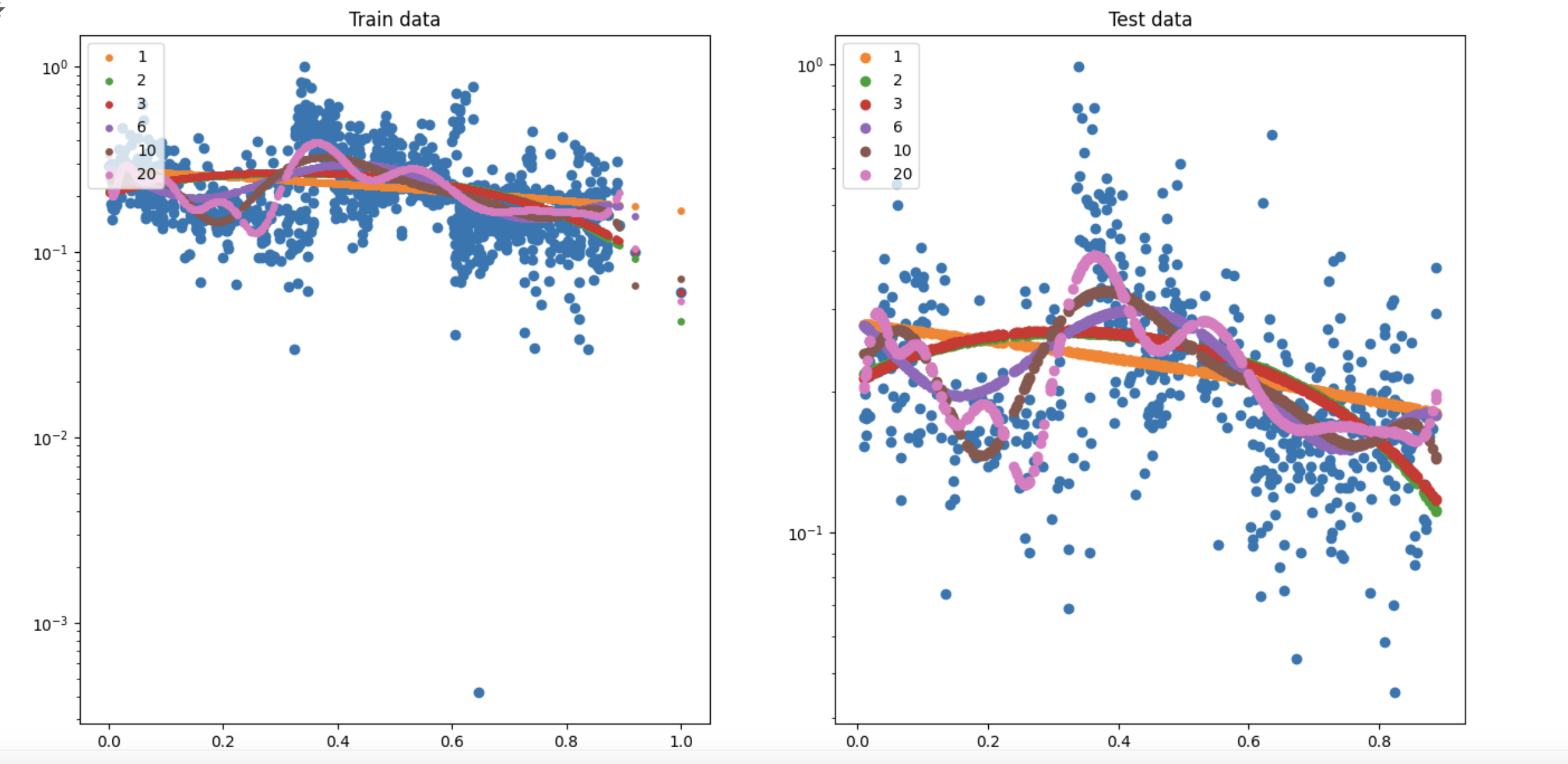
- The model is trained Using MovieLens Dataset which comprises approximately 1 million ratings for 3,706 movies, provided by 6,040 users.
- The system has two different algorithms, Firstly, Building a recommendation System based on Popularity. Secondly, Recommendation Based on IBCF.
- IBCF based on ' Similar users have similar tastes'.
- Similarity matrix is generated using Centered Cosine Similarity approach.
- The model is evaluated using weighted similarity matrix.
- Team based (3 members, located in the USA, the UAE, and Kuwait.
- Collaboration via weekly online meetings via zoom and Google colab for coding.
- Github for version control is used

Movie Review Sentiment Analysis
Build a Binary Classification Model.
- Embedding generated by OpenAI’s text-embedding-3-large.
- Implemented Logistic Regression with Elastic Net regularization (`penalty=’elasticnet’`).
- Hyperparameters: ex: `C=5`:: Inversely proportional to regularization strength.
- Training: The model was trained on the preprocessed and vectorized training data, learning to associate feature patterns with sentiment labels.
Interpretability Analysis
- Prediction: After training, the model predicts the probability of each review belonging to the positive sentiment class.
- Evaluation Metric: Utilized the Area Under the Receiver Operating Characteristic Curve (AUC-ROC) to assess the model’s performance.
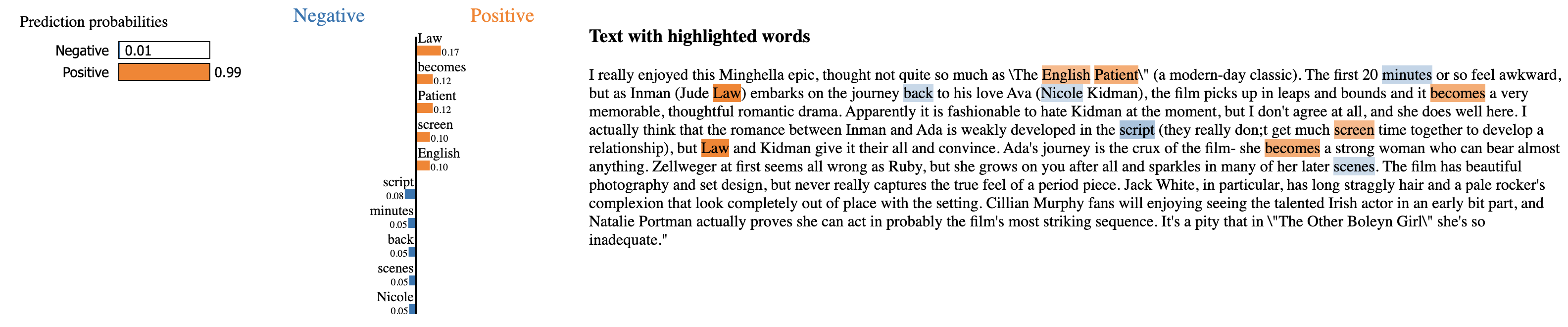
- Local Interpretability with LIME.
model.

Walmart Store Sales Forcasting
Predict the weekly sales
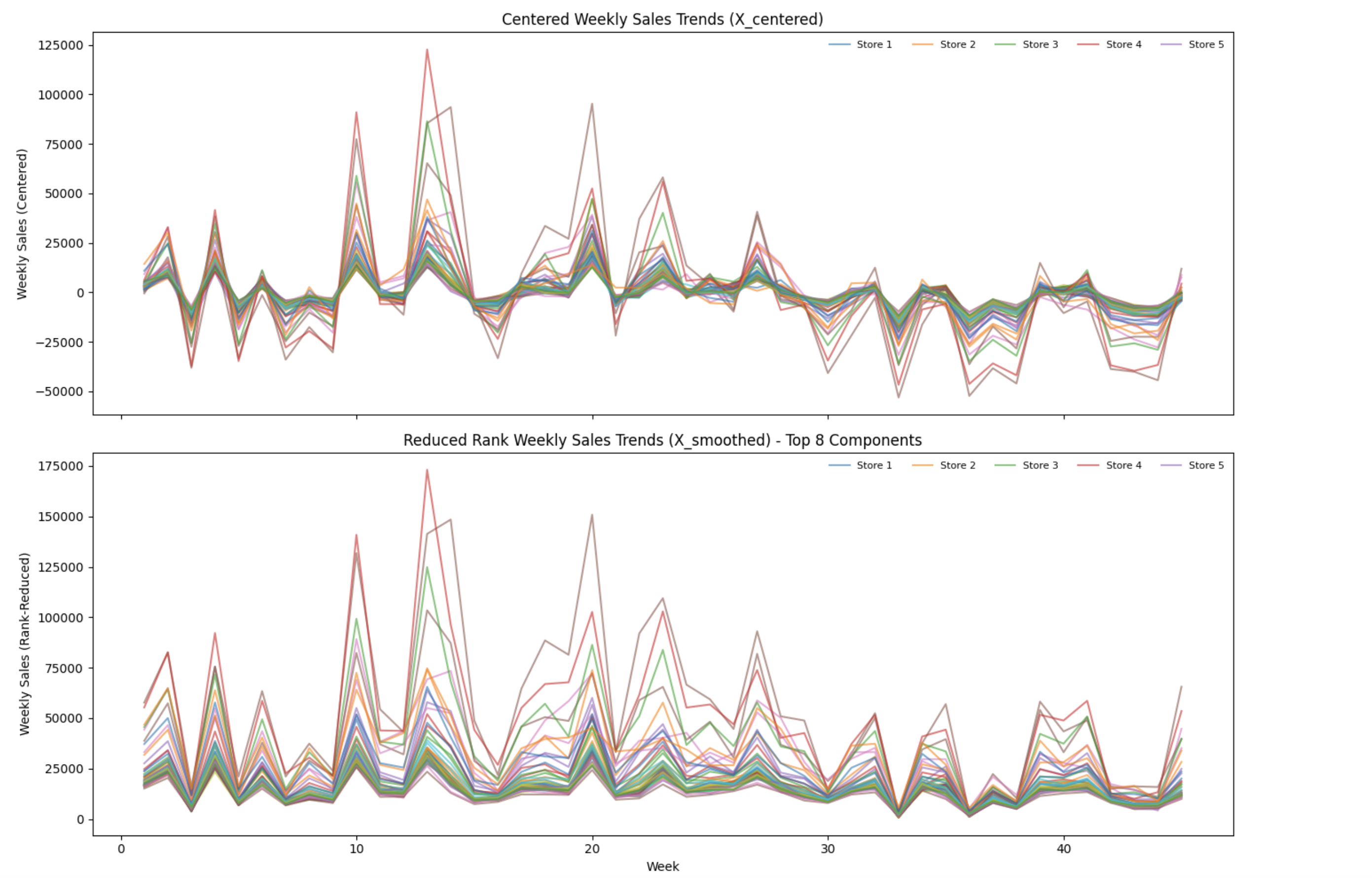
- EDA: Time series preprocessing, used SVD to diminish noise, Impute missing values.
- Training: Linear Regression For the subsequent two months for every combination of Store, Dept, and Date in
test.csv using the historical data from train.csv.
- Evaluation: Accuracy refers to the average of the WMAE over the 10 test folders.
Predict the Housing Prices in Ames
- Predict the price of homes, but importantly, in log scale.
- Built TWO prediction: one model based on linear regression models with Elasticnet penalty
and another model based on Boosting tree.
- Evaluation Metric. Evaluated on Root-Mean-Squared-Error (RMSE) between the natural
logarithm of the predicted price and the natural logarithm of the observed sales price.